MCAT Study Plan: 3- and 6-Month Schedules + Free Template
An MCAT study plan starts with the official exam blueprint and a baseline practice test, then uses a study-and-practice cycle to close your gaps before you sit a full-length official exam under test-day timing. According to the AAMC, your MCAT preparation should be tailored to your individual knowledge base, the concepts you still need to learn, and your available time. To that end, we’ve broken down sample MCAT study plans based on 1-, 3-, and 6-month time frames (as well as a special plan for full-time workers!) below. Feel free to print this out and use as a template for your own MCAT study plan!
| Item | Detail (AAMC) |
|---|---|
| Exam | The Medical College Admission Test (MCAT) is a standardized, computer-based exam with four multiple-choice sections, developed and administered by the AAMC |
| Chem/Phys | Chemical and Physical Foundations of Biological Systems: 59 questions, 95 minutes (10 passage-based sets of 4–6 questions and 15 independent questions) |
| CARS | Critical Analysis and Reasoning Skills: 53 questions, 90 minutes (9 passage-based sets of 5–7 questions; no independent questions) |
| Bio/Biochem | Biological and Biochemical Foundations of Living Systems: 59 questions, 95 minutes (10 passage-based sets of 4–6 questions and 15 independent questions) |
| Psych/Soc | Psychological, Social, and Biological Foundations of Behavior: 59 questions, 95 minutes (10 passage-based sets of 4–6 questions and 15 independent questions) |
| Total content time | 6 hours and 15 minutes |
| Total seated time | About 7 hours and 30 minutes, not including check-in at the test center |
| Section scores | 118 to 132 for each section, with a midpoint of 125 |
| Total score | 472 to 528, with a midpoint of 500 (the four section scores added together) |
| Guessing and the curve | No penalty for wrong answers; the exam is not graded on a curve. Scores are scaled and equated so they have the same meaning across test forms and dates |
Try the Quiz generator
MCAT exam format and scoring
The AAMC's "What's on the MCAT Exam?" overview explains that the AAMC develops the exam with its member medical schools and administers it multiple times each year at Pearson testing sites in the United States, Canada, and selected locations worldwide. Most medical schools in the United States, and many in Canada, require applicants to submit recent MCAT scores. The MCAT is a multiple-choice, computer-based exam.
The actual content of the MCAT will take 6 hours and 15 minutes. However, when you factor in the 4-minute test-day certification, the 3-minute void question, the optional 10-minute tutorial, the optional breaks (10 minutes, a 30-minute mid-exam break, and 10 minutes), and the optional 5-minute end-of-day survey, you should plan on a total seated time of about 7 hours and 30 minutes, not including check-in.
According to the AAMC exam score scale, you receive five scores: one for each section and one total score. Each section of the MCAT is scored on a scale of 118 (the lowest score) to 132 (the highest score), with a midpoint of 125. Your total MCAT score is simply the sum of your four section scores, meaning that your total score will be between 472 and 528, with a midpoint of 500.
For each section of the MCAT, your raw score (i.e., number-correct score) is simply the number of questions you got right (wrong answers are scored the same as unanswered questions, so the AAMC recommends that you answer every question and make your best guess if necessary). Your raw score is then equated (not curved) to yield a scaled score, meaning that a particular scaled score on the MCAT means the same thing regardless of which version of the MCAT you took or who else took the exam with you. Percentile ranks are also reported and are updated each year on May 1 using data from test takers from the previous three years.
The three natural and social science sections of the MCAT (Chem/Phys, Bio/Biochem, and Psych/Soc) are centered around 10 overarching “big ideas,” or foundational concepts, in the sciences. On the MCAT, you’ll need to integrate knowledge from different scientific disciplines as well as demonstrate scientific inquiry and reasoning skills. The material on the Chem/Phys, Bio/Biochem, and Psych/Soc sections of the MCAT is intended to represent what’s covered in year-long courses in biology, general chemistry, organic chemistry, and physics, as well as material that might be found in a first course in biochemistry, sociology, and/or psychology. The following charts provide an approximate (to the nearest 5%) breakdown of the types of content covered in each science section of the MCAT, although the exact makeup will vary from version to version of the exam.
Section-by-section MCAT content

| Section | Topics (AAMC discipline targets) | Questions and time |
|---|---|---|
| Chemical and Physical Foundations of Biological Systems | First-semester biochemistry 25%, introductory biology 5%, general chemistry 30%, organic chemistry 15%, introductory physics 25% | 59 questions, 95 minutes |
| Critical Analysis and Reasoning Skills | No specific content knowledge required. Skills: Foundations of Comprehension 30%, Reasoning Within the Text 30%, Reasoning Beyond the Text 40%. Passage content: humanities 50%, social sciences 50% | 53 questions, 90 minutes |
| Biological and Biochemical Foundations of Living Systems | First-semester biochemistry 25%, introductory biology 65%, general chemistry 5%, organic chemistry 5% | 59 questions, 95 minutes |
| Psychological, Social, and Biological Foundations of Behavior | Introductory psychology 65%, introductory sociology 30%, introductory biology 5%. About 5% of the section also includes psychology questions that are biologically relevant, in addition to the 5% biology target | 59 questions, 95 minutes |
Chemical and Physical Foundations of Biological Systems
This section covers basic principles of chemistry, organic chemistry, and physics relating to biological and medical phenomena, plus the mechanical, physical, and biochemical functioning of human tissues, organs, and organ systems. It also covers introductory biology, organic chemistry, inorganic/general chemistry, physics, first-semester biochemistry, molecular biology, and research methods and statistics. You’ll have access to a periodic table during this section of the MCAT.
Critical Analysis and Reasoning Skills
Comprehension of and reasoning about passages drawn from the humanities and social sciences, representing a diversity of disciplines, points of view, and writing styles. Passages are typically 500 to 600 words in length, but do not let the word count fool you; these passages are deceptively complicated! All 53 questions will be associated with a passage; no outside knowledge will be required.
Biological and Biochemical Foundations of Living Systems
Biological and biochemical foundation for MCAT exam questions relating to characteristics and processes that are unique to living organisms, including growing and reproducing, maintaining a constant internal environment (homeostasis), acquiring materials and energy, sensing and responding to environmental changes, and adapting, plus how cells and organ systems act independently and together. The largest discipline targeted by this section is introductory biology (approximately 65%).
Psychological, Social, and Biological Foundations of Behavior
Mostly from introductory psychology (~65%), with smaller portions of intro sociology and biology
How to build your MCAT study plan
Do not start by copying a generic calendar and hoping it fits. The AAMC's page on creating your MCAT exam study plan says it depends on your individual needs, including your familiarity with the tested material, any concepts you need to work on, and how much time you have to prepare. The length of each step depends on your baseline, which is why this guide offers sample 1-, 3-, and 6-month calendars instead of one official timetable. The AAMC does not prescribe a fixed number of months or hours.
Once you know where your weaknesses are, use AAMC’s What’s on the MCAT Exam? to get a handle on exactly what kinds of questions and content you should focus on. Available both as a PDF and a (free) course through the MCAT Official Prep Hub, this resource is a detailed outline of all of the content areas you’re expected to know for the MCAT (and also includes links to free practice materials like Khan Academy videos and open-access textbooks!). The course also includes 120 free practice questions from the retired Official Guide to the MCAT Exam. Official MCAT prep materials come straight from the folks behind the MCAT, so they should be at the core of your MCAT studying.
Take the MCAT Official Prep Unscored Sample Test from AAMC (you’ll need to make an account with AAMC) to establish a baseline. This full-length, 230-question MCAT practice exam mirrors the format, length, and functionality of the real MCAT, but unlike official full-length practice exams available through the AAMC MCAT Exam Prep Hub, this exam does not provide you with percentile rank or a scaled score. After you’ve completed the practice exam, open up each section of the score report. On the Content & Skills Breakdown tab, note the areas where you struggled the most and rate yourself as having low, medium, or high confidence in each of the content areas (for example, mark topics you’d be seeing for the first time as low confidence, topics you’re familiar with but need to brush up on as medium confidence, etc.).
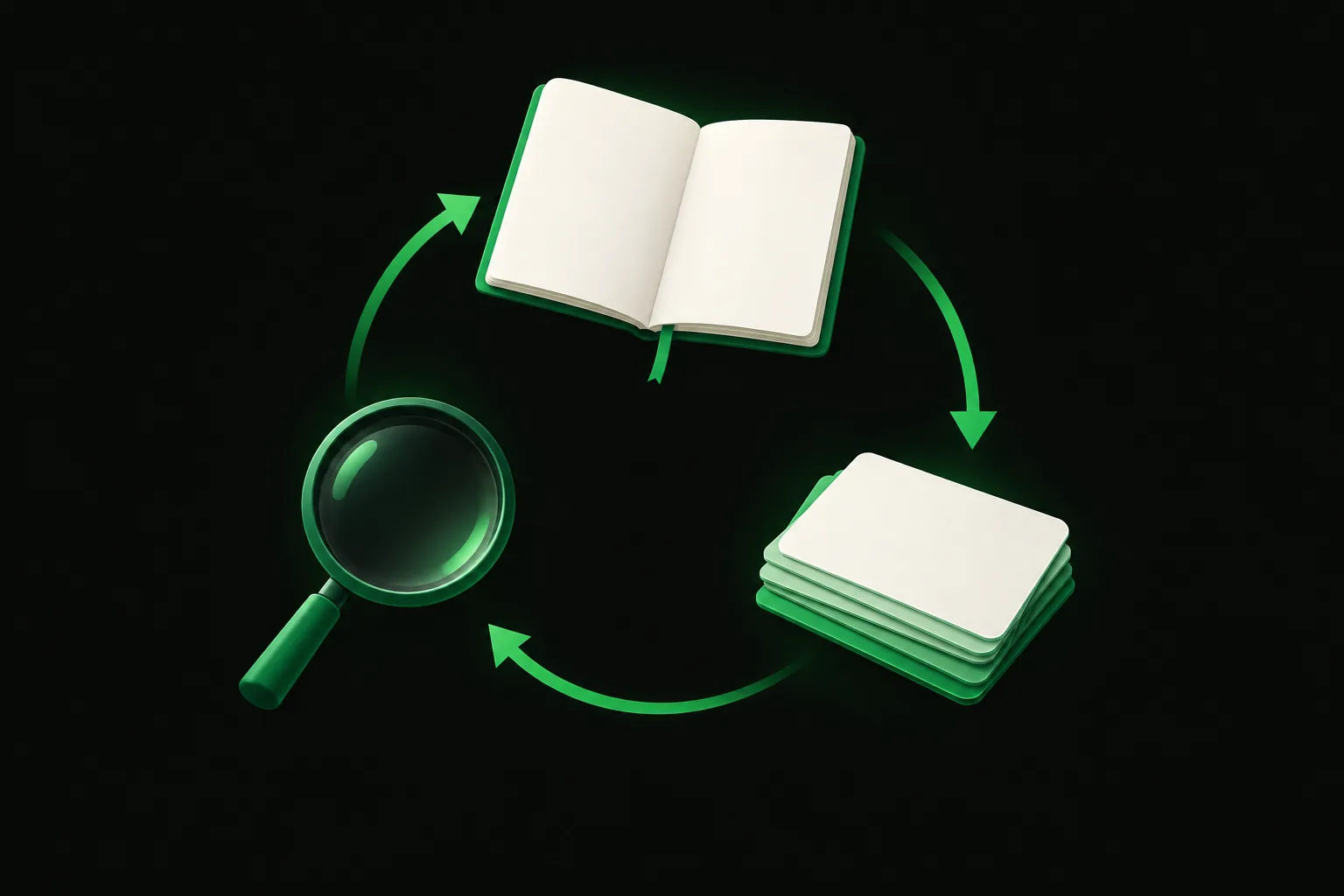
Use the AAMC’s recommended cycle to actively learn MCAT content. Rather than passively going through materials (say, by rereading and/or highlighting information in your notes), AAMC’s study cycle encourages active learning:
- Learn about a new topic or briefly revisit previously-learned content
- Practice with a small set of questions
- Evaluate your answers and think about why answers were right/wrong
- Review concepts and facts in your weak areas.
- Recall as much of the information as you can without referring to your notes
- Answer more questions in the same topic area.
- Complete a cumulative set of questions on all topics you have studied so far.
- Revisit content you struggled with from previous days
- Repeat the cycle with a new topic.
The AAMC notes that it is normal to forget what you have learned, and that active learning requires more than reading or watching a video. You have to recall, practice, and reflect, and keep revisiting earlier material. That last step is the same idea as spaced repetition, and the short question sets are a form of active recall. For a broader look at those methods, see our guide to how to study effectively.
When you are ready for full-length exams, take the free AAMC MCAT Official Prep Practice Exam One under test-day timing and get used to the exam’s functionality. Afterward, take the time to figure out why you missed or flagged questions and how you can avoid making similar mistakes going forward. Repeat this process with additional practice exams, devoting the time in between exams to studying content areas you struggled with. (Seriously, if you want your MCAT scores to improve, AAMC says you’ll need to put a substantial amount of work into areas you’re struggling with between practice exams!)
After reviewing your notes you can test yourself even further and generate practice questions from your notes using StudySim’s AI quiz generator, then go back to the material to understand why you missed any of the questions. We built StudySim, and we should be upfront: it is a practice-question tool rather than a complete MCAT course, and it is not a substitute for AAMC Official Prep.
MCAT study plan schedules: 1, 3, and 6 months
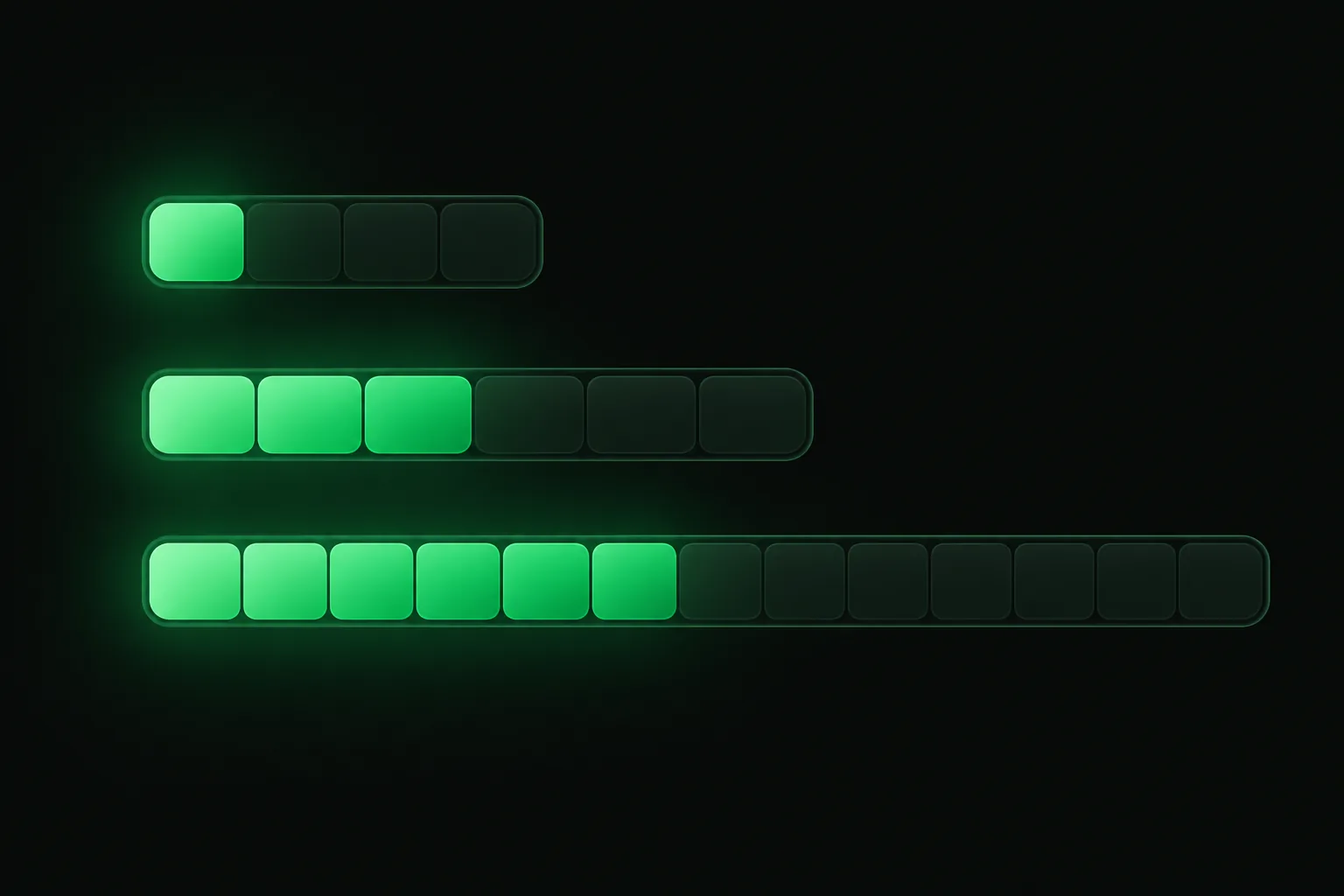
Use the sample schedules below to help guide your own MCAT studying timeline, and choose the timeline that makes the most sense based on the results of your unscored practice exam (for example, if you found yourself rating many topics as areas of low confidence, you may want to allot yourself more time to learn content before moving on to official practice exams; treat these as sample calendars, not official AAMC timetables). Taking the Unscored Sample Test can also help you pinpoint where to focus your studying! Then, choose the timeline that makes the most sense for you and incorporate any areas you need extra help with into your schedule!
1-month MCAT study plan
A one-month MCAT study plan is a compressed version of the same process.
| Week | Focus | Methods |
|---|---|---|
| Week 1 | Learn what’s on the exam and assess your baseline | Review the official content outline. Take the free Unscored Sample Test. Rate each content area low, medium, or high confidence. Start the study-and-practice cycle on the lowest-confidence topics. Add a short CARS passage set on most days. |
| Week 2 | Close the biggest content gaps | Keep cycling through low- and medium-confidence topics: short practice, review every miss, summarize from memory, then more questions. Do a cumulative question set on everything covered so far. Revisit earlier topics so they do not fade. |
| Week 3 | First scored official full-length and a full review | Take free Practice Exam One under test-day timing, including the official section times and breaks. Review every incorrect or flagged question. Spend the rest of the week only on the content and skills those misses reveal. |
| Week 4 | A second official exam, then targeted polish | Take another official practice exam if you have one, again under test-day timing. Review misses in full. Use remaining days for weak-area cycles and CARS, not for new chapters you have not practiced. Stop early enough to rest before test day. |
3-month MCAT study plan
Three months is the middle option: enough time to learn weaker topics properly, practice them, and still leave several weeks for official full-lengths with review in between. Many students who are still taking prerequisite courses, or who have uneven confidence across sections, will be more comfortable here than on the one-month calendar.
| Week | Focus | Methods |
|---|---|---|
| Weeks 1–2 | Blueprint and baseline | Review the official content outline. Take the Unscored Sample Test and assign confidence ratings for all four sections. Sketch which topics are first-time learning vs. refresh. Start daily or near-daily CARS passages. |
| Weeks 3–6 | Content review by section, starting with low-confidence topics | Run the study-and-practice cycle through Chem/Phys, Bio/Biochem, and Psych/Soc, one topic at a time. After each topic, add a short question set, review misses, and summarize from memory. Include cumulative sets and spaced reviews of earlier material. |
| Weeks 7–8 | Mixed practice and first scored official exam | Shift toward mixed, passage-style practice and official question sets. Take Practice Exam One under test-day timing. Complete a full miss review and rebuild your weak-area list from that exam, not from guesswork. |
| Weeks 9–10 | Targeted remediation | Spend this block on the content and skills you missed. Keep CARS going. Do cumulative practice so older topics stay fresh. Take a second official practice exam only after you have worked on those weaknesses. |
| Weeks 11–12 | Remaining official full-lengths and test-day polish | Sit additional official practice exams under test-day timing, with a full review after each one. Taper new content. Practice the break routine and timing plan you will use at the Pearson site. Rest in the final day or two. |
6-month MCAT study plan
A six-month MCAT study plan is useful if you are learning a lot of the content for the first time, if you want a lighter weekly load, or if you are balancing school or work.
| Week | Focus | Methods |
|---|---|---|
| Weeks 1–2 | Blueprint and baseline | Review the official content outline. Take the Unscored Sample Test. Rate confidence for every content area. Build a topic list in priority order, low confidence first. |
| Weeks 3–10 | First-time learning for low-confidence topics | Move slowly through the study-and-practice cycle. Learn or review, take a short question set, explain every answer, summarize from memory, then practice more. Revisit earlier topics each week. Keep CARS regular, even in content-heavy weeks. |
| Weeks 11–16 | Refresh medium-confidence topics and mixed practice | Return to topics you already learned and need to sharpen. Add cumulative question sets that mix sections. Use official question packs or section banks if you have them, still reviewing every miss. |
| Weeks 17–20 | First official scored exams, with review in between | Take Practice Exam One under test-day timing. Review thoroughly, then work on those weak areas before the next official exam. Do not stack full-lengths without a remediation block between them. |
| Weeks 21–24 | Remaining official full-lengths and final polish | Use later official practice exams the same way: timed conditions, complete miss review, then targeted cycles. Taper new material in the last two weeks. Confirm logistics for test day and get rest. |
Working-full-time MCAT study plan
The AAMC is honest that getting ready takes time and dedication, and that fitting that work around an already packed schedule can be hard. If your days are already full because of a job, stretch the same method over a longer calendar and save official full-lengths for a weekend when you can protect the real section times and breaks.
| Block | Focus | Methods |
|---|---|---|
| Weeknights | One topic from your low- or medium-confidence list | Run a shortened study-and-practice cycle: review or learn the topic, do a short question set, review every miss, and write a brief summary from memory. If time is tight, stop after the miss review and finish the summary the next night rather than skipping the questions. |
| Most weekends | CARS plus cumulative practice | Do a longer CARS passage block and a cumulative set on topics from the past week. Revisit one older weak area. Keep official full-lengths off these weekends until your baseline and early content work are underway. |
| Selected weekends, later in the plan | Official full-length exams | Take Practice Exam One, then later official exams, under test-day timing on a morning that can hold the full seated time. Use the following weeknights only to review incorrect and flagged questions and to restudy those topics. |
| Months 1–6 overlay | Same phases as the 6-month table | Weeks 1–2 for the outline and Unscored Sample Test; a long content-learning phase; mixed practice; then official exams with review in between. Stretch a phase rather than cutting the review step. |
Free printable MCAT study plan template
Feel free to adapt the printable template. It follows the same AAMC steps used in this guide: a content-outline and baseline checklist, a low/medium/high confidence log for the four sections, blank calendars for a 1-, 3-, or 6-month plan, a weeknight-and-weekend grid for working full time, a study-and-practice cycle reminder, and a log for official practice exams and miss reviews.
Download the free MCAT study plan template (PDF)
Print the confidence log first, right after you take the Unscored Sample Test. For a broader approach to preparing notes before beginning, refer to how to make a study guide.
Practice resources for your MCAT study plan
Begin with the official AAMC materials, especially free planning and study resources and official low-cost practice products. Protect those full-length exams first: they use questions from previously administered exams and the same look, feel, and functionality you will see on test day.
- Free planning tools. What’s on the MCAT Exam? Creating Your MCAT Exam Study Plan page, Practice with Exam Features (12 free practice questions to familiarize yourself with MCAT question types, with keyboard shortcuts available!), and the MCAT Sample Question Guide (12 free practice questions, three from each MCAT section).
- Free full-length practice. The Unscored Sample Test consists of 230 questions, just like Practice Exam One. Practice Exam One (receive a scaled score and percentile rank upon completion!) Unscored Sample Test (includes video walkthroughs for four CARS passage sets in the answer review portion, but no scaled score or percentile rank!)
- Low-cost official practice. The AAMC provides five other full-length (230 questions each) Practice Exams (numbered Practice Exams 2–6) with detailed explanations of correct and incorrect answer choices and helpful links to related Khan Academy content. Official question sets include a CARS Question Bank with 575 passage-based questions, Biology Question Packs Volumes 1 and 2 (120 questions each), Chemistry and Physics question packs, Section Bank Volumes 1 and 2, and an Independent Question Bank. Official Prep Online-Only Bundle (includes the official products, including the CARS Question Bank, totaling 2,876 unique questions!)
- Khan Academy MCAT Collection. Free MCAT content created by Khan Academy with support and funding from the AAMC and the Robert Wood Johnson Foundation. There are practice questions (3,000) and videos (1,100) pertaining to all four sections of the MCAT.
After utilizing all official MCAT practice materials, you may want to supplement your MCAT prep with an MCAT course, additional (non-official) MCAT practice questions, or even MCAT books. In our best MCAT prep guide we compared those other options too, but note that StudySim is not a comprehensive MCAT course.
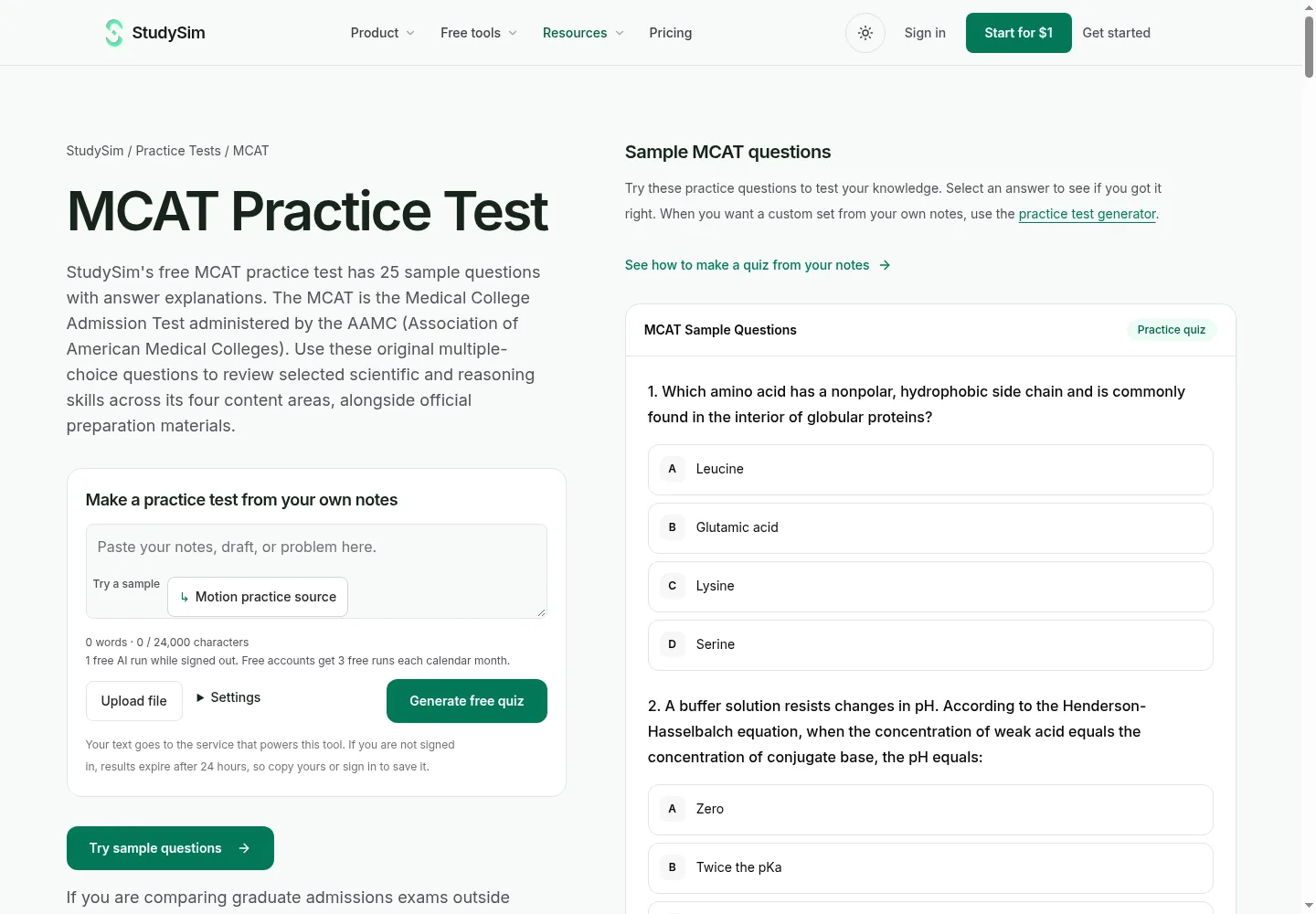
For extra recall practice from your own notes, StudySim’s free MCAT practice test includes 25 original sample questions with answer explanations, covering selected scientific and reasoning skills across the four content areas. You can also upload notes or a file to the practice-test generator on that page, or turn a PDF into a practice quiz. Feed it your material, and the free AI quiz generator will provide you with a five-question practice quiz, complete with answer choices and explanations. Input and usage limitations apply: users not signed in to an account can use the generator once for free, and users with a free account can use it three times for free each calendar month. Definitely don’t skip using official AAMC practice materials, though, because the generator is meant to supplement, not replace, official MCAT practice!
FAQ
How long should an MCAT study plan be?
The AAMC does not set a required number of months or study hours. It says your plan should be based on your schedule, your understanding of the content, and what you still need to learn and practice, and that your baseline assessment determines how long each study-and-practice step takes. Use the 1-, 3-, or 6-month sample tables in this guide as starting calendars, then stretch or compress them after you take the free Unscored Sample Test and rate your confidence.
Is a 1-month or 2-month MCAT study plan enough?
It depends on your baseline, not on the calendar alone. A one- or two-month plan can work if the Unscored Sample Test and your confidence ratings show that most topics are a refresh and you still have time for official full-lengths plus a full miss review between them. If many topics are low confidence and need to be learned for the first time, give yourself a longer plan. The AAMC’s process is the same at every length; the shorter calendars just have less room for first-time learning.
How many days per week should I study for the MCAT?
The AAMC does not prescribe a number of days per week. It does say preparation takes time and dedication and can be hard to balance with a busy schedule. A plan only works if you can keep the cycle going: learn or review, practice, analyze misses, and come back to older material. The working-full-time sample in this guide uses weeknights for one topic at a time and weekends for longer CARS, cumulative practice, or official full-lengths.
How is the MCAT scored?
Each of the four sections is scored from 118 to 132, with a midpoint of 125. The total score is the sum of the section scores and ranges from 472 to 528, with a midpoint of 500. Scores are based on the number of questions you answer correctly. There is no penalty for guessing, and the exam is not graded on a curve. Scaled scores are equated so they have the same meaning across test forms and dates. Percentile ranks are updated on May 1 each year.
What official AAMC practice should I use first?
Start with the official content outline and the free Unscored Sample Test to set your baseline and confidence ratings. When you are ready for a scored full-length, take free Practice Exam One under test-day timing, then review every incorrect or flagged question before you take another official exam. The AAMC also offers five additional low-cost full-length exams (Practice Exams 2–6) and official question sets, plus free tools such as the Practice with Exam Features tool and the Sample Question Guide.
Can I follow an MCAT study plan while working full time?
Yes. You will likely need a longer calendar, such as the six-month sample, and a weekly rhythm that protects a full official practice exam on a weekend. Keep official materials at the center, use weeknights for the study-and-practice cycle on one weak topic, and do not skip the review between full-lengths. The AAMC’s planning resources are written for people who have to balance preparation with an already busy schedule.
About the author
Jozef Gherman is the founder of XYZAI, the company behind StudySim, where he builds AI tools that help students and writers study smarter and write with confidence. He writes about study techniques, exam prep, and practical ways to use AI for learning.