Spaced Repetition: How It Works + a Free Review Schedule
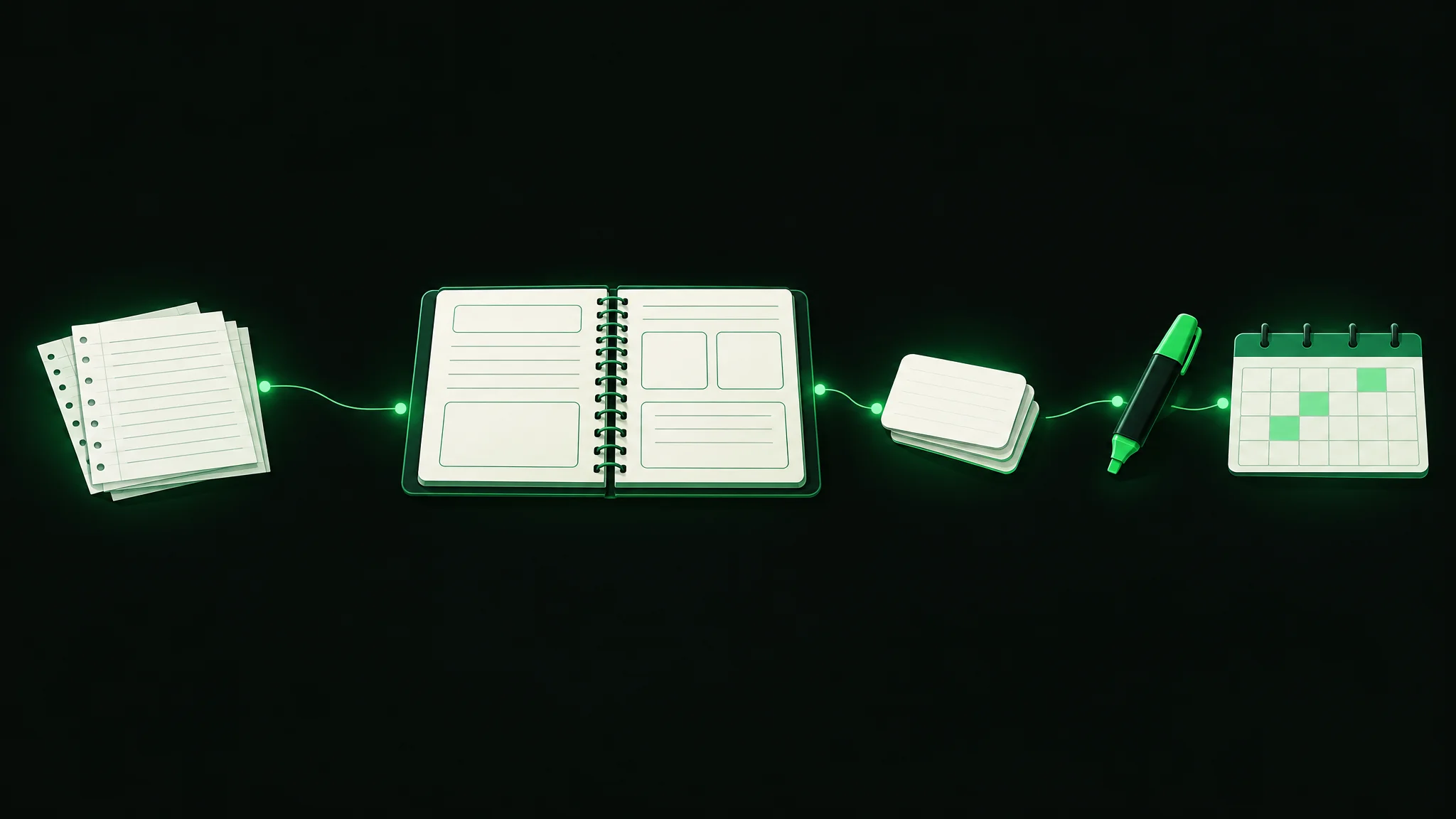
Spaced repetition is a study method where you review the same material several times, with the gaps between reviews getting longer each time, so you go back to an idea just as you start to forget it. It replaces one long cram session with short, spread-out reviews that help you remember for longer. Here’s how spaced repetition works, what the research says and how to do it with paper flashcards, the 2357 method or an app.
| Term | Definition | Best for | Strength of evidence |
|---|---|---|---|
| Spaced repetition | Reviewing information at gradually increasing time intervals instead of all at once | Learning many items, such as vocabulary, and keeping them in memory for a long time | High: distributed practice was rated high utility in a 2013 review of 10 learning techniques |
| Origin | Builds on Hermann Ebbinghaus's forgetting-curve research from the 1880s | Understanding why memories fade without review | Classic finding, replicated with one subject in 2015 |
| Main tools | Flashcards, the Leitner box system, the 2357 method and spaced repetition apps such as Anki | Students who want a simple schedule or an app that plans reviews for them | Spacing effect supported by a meta-analysis of 317 experiments |
Try the Study guide generator
What is spaced repetition?
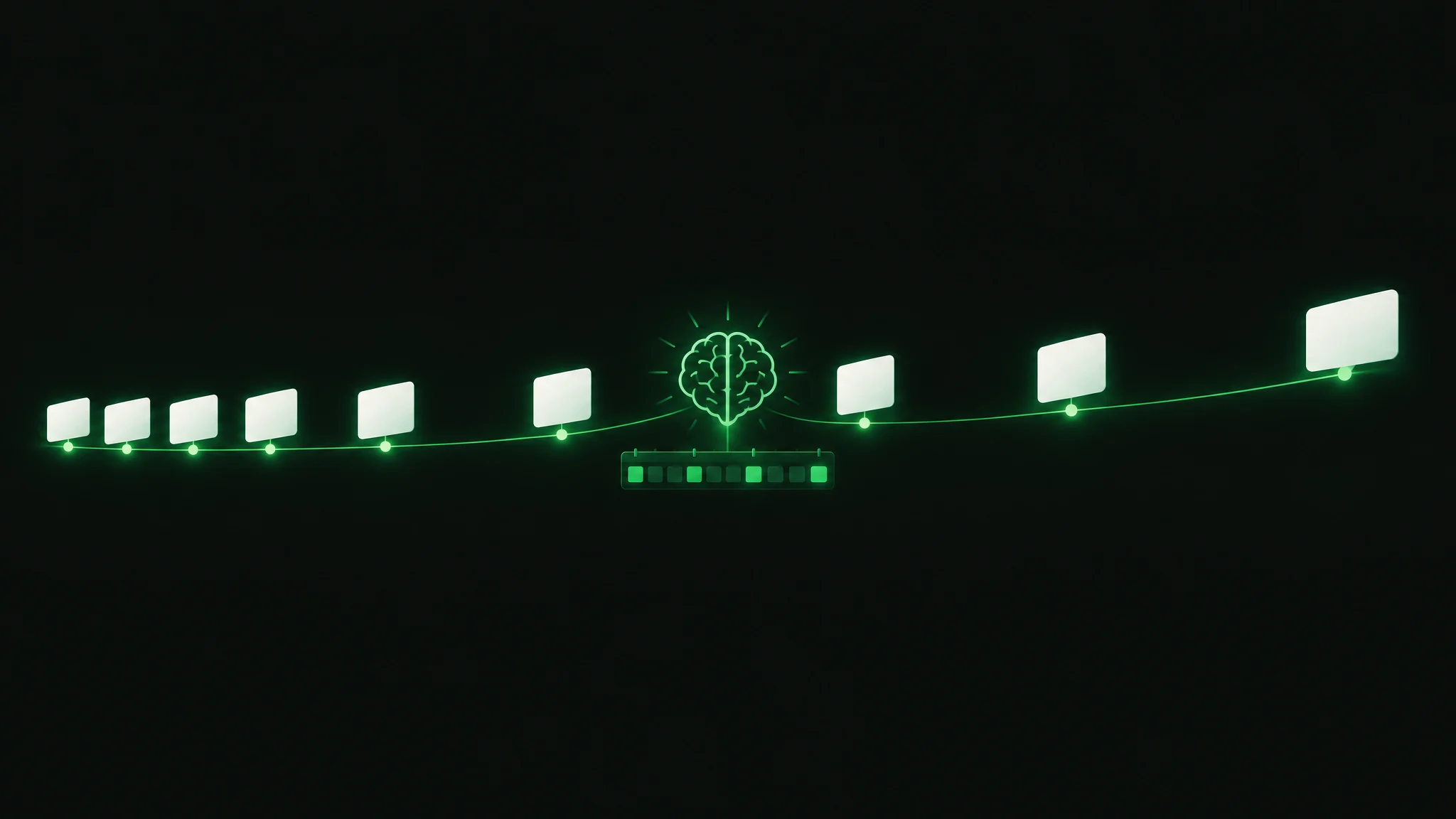
Spaced repetition is a way of learning new information where you review it over ever-increasing intervals. When you learn something new you review it after a while and review it again when you’re about to forget it. And keep on reviewing it with longer and longer gaps until you’ve got it. Khan Academy breaks spaced repetition down nicely: review something shortly after you learn it, then review it again as your memory of it starts to fade.
Spacing is the polar opposite of cramming. According to The Learning Scientists, cramming occurs when a student tries to learn as much information as possible in one sitting right before an exam. Spacing, on the other hand, refers to breaking up studying into smaller sessions over an extended period of time. Their example: five hours spread over two weeks beats the same five hours right before the exam.
Spaced repetition focuses on when you study, while active recall focuses on how: actively retrieving the answer from memory as opposed to passively reviewing notes. The two work best together, and most spaced repetition tools are built around flashcards for exactly that reason.
How spaced repetition works

Spaced repetition is based on the Forgetting Curve discovered by Hermann Ebbinghaus in 1885. Ebbinghaus conducted experiments on himself, learning lists of nonsense syllables and testing himself to see how quickly he forgot them.
He discovered that we forget information quickly at first and then more slowly afterwards. And that repetition can slow down how quickly we forget information. So after each review you can review it further and further apart – maybe a day, then a couple of days, then a week or more.
You also get benefits from making an effort to try and remember information. If you wait a while before you review something you’ll have to put in more effort to remember it, and you’ll also learn which bits you’re still struggling with. A little forgetting is good, as The Learning Scientists explain that actually some forgetting is required for spaced practice to help.
The research behind spaced repetition
Spacing out review has been studied for many years and backed up time and again. In his 1932 book Psychology of Study C. A. Mace recommended spacing review out: reviews should be spaced at gradually increasing intervals, roughly one day, two days, four days, eight days and so on. And in 1939 H. F. Spitzer carried out a study on over 3,600 sixth grade pupils in Iowa schools and found evidence to support spaced repetition for learning science facts.
Modern reviews back this up. A 2006 meta-analysis by Cepeda and colleagues in Psychological Bulletin pulled together 839 assessments of distributed practice from 317 experiments in 184 articles. Of the 10 learning techniques studied in a comprehensive 2013 review by Dunlosky and colleagues, by the Association for Psychological Science, only two, distributed practice and practice testing, were found to have high utility. Some commonly used techniques, such as rereading and highlighting, were shown to be of relatively low utility.
| Study | What was tested | Key finding |
|---|---|---|
| Ebbinghaus (1885) | One person memorizing nonsense syllables | Information is lost over time when there is no attempt to retain it (the forgetting curve) |
| Spitzer (1939) | More than 3,600 sixth-grade students in Iowa learning science facts | Spaced repetition was effective |
| Cepeda et al. (2006) | 839 assessments from 317 experiments in 184 articles | The gap that gives the best retention gets longer as the time until the test gets longer |
| Cepeda et al. (2008) | More than 1,350 people, review gaps up to 3.5 months, final test up to 1 year later | Best gap was about 20 to 40% of a 1-week test delay and about 5 to 10% of a 1-year delay |
| Dunlosky et al. (2013) | Review of 10 learning techniques | Distributed practice and practice testing were rated high utility |
Students will find the 2008 study the most useful. In a study by Cepeda et al where over 1,350 people learned facts and were reviewed on them after a gap of up to 3.5 months and tested up to a year later, the best gap grew as the test got further away. So a test next week calls for short gaps, and a final exam months away calls for longer ones.
According to a summary of research on spaced repetition on Wikipedia, expanding intervals are at least as effective as, and sometimes better than, evenly spaced reviews. There’s no consensus on the ideal spaced repetition schedule, and some researchers believe the best one depends on the person. Spacing your reviews matters more than finding a perfect formula.
How to use spaced repetition
You can use paper based flashcards, follow a schedule like the 2357 method or use an app to do spaced repetition. Whichever method you use it’s important that each review is a test – you look at the question and try and answer it yourself before checking.
Review after each class
Birmingham City University lays out the steps of this process. Straight after a lesson, summarize the key points in your own words or make flashcards. The next day, test yourself without your notes. Three days later, test yourself again. After a week, repeat and pay attention to what areas you’re still struggling in. The Learning Scientists recommend that you also include some older material each time so that you don’t forget that either.
The 2357 method
The 2357 method is a spaced repetition schedule that Birmingham City University recommends for planning review backward from an exam. You work backwards from the day of the exam planning review sessions one day before, two days before that, then three, five and seven days before that. So five review sessions spread over about 18 days. You can vary the schedule depending on what you’re reviewing – leaving longer gaps for things you find easy and shorter gaps for more difficult areas.
The Leitner system
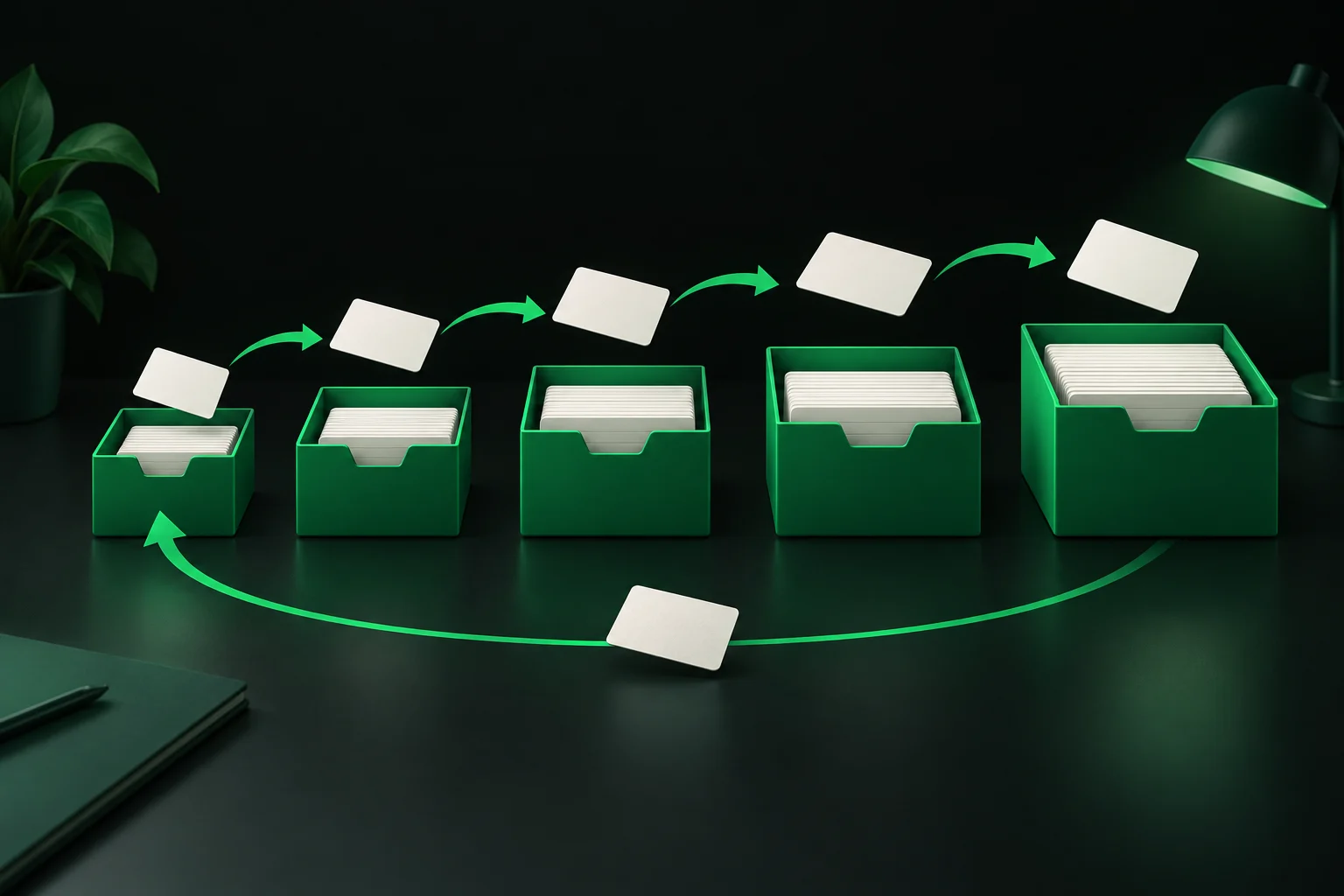
The Leitner System was invented in 1972 by German science journalist Sebastian Leitner. Flashcards are kept in boxes and each time you get one right it moves on to the next box which is looked at less regularly. When you get it wrong, it goes back to the first box. Difficult flashcards are seen regularly and easy ones rarely. Our guide on how to make flashcards covers writing cards that work well in a Leitner box.
Spaced repetition apps
Spaced repetition apps and software automate the process for you as they show you a flashcard and, after you’ve had a go at answering, you reveal the answer. You indicate how difficult the flashcard was and the app works out when to show it to you again using an algorithm. One popular spaced repetition app is Anki. After each flashcard you indicate if it was Again, Hard, Good or Easy and Anki has two spaced repetition algorithms you can choose from – SM-2 (the traditional Anki scheduler) and FSRS (Free Spaced Repetition Scheduler) which was introduced in Anki 23.10. Our roundup of the best free flashcard apps notes which ones schedule reviews for you.
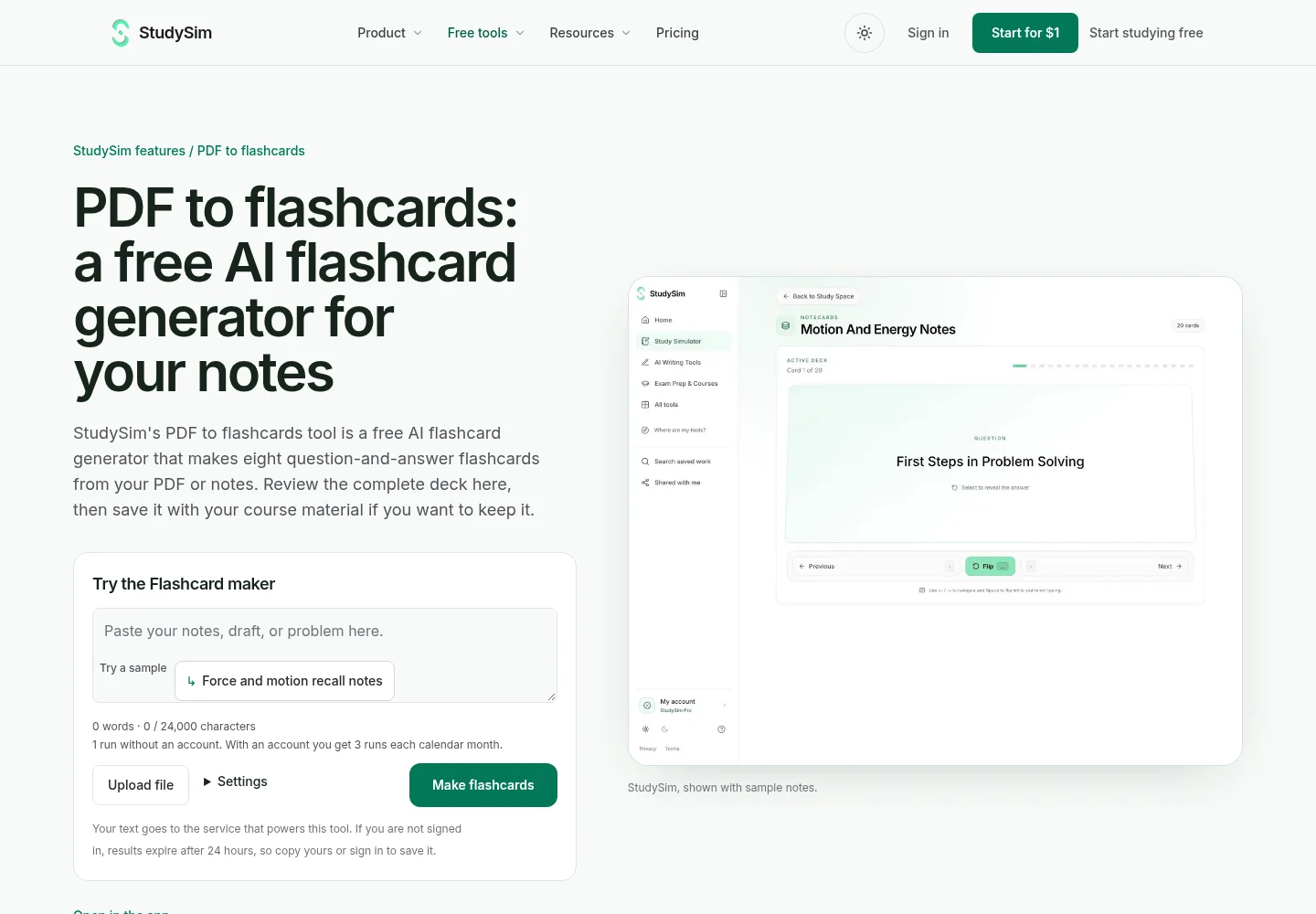
Or, if you’re working from notes you’ve already written down, you can turn a PDF into flashcards with StudySim, which makes eight question-and-answer flashcards from your document, or you can simply copy and paste your notes into the AI flashcard maker. The free generator doesn’t have an export to Anki option, but you could make your own Leitner box to space out reviewing your flashcards.
Free printable review schedule
We made a two-page printable spaced repetition schedule based on the methods above: a forward plan for reviewing after each class (day 1, day 3, day 7 and a longer gap), a backward 2357 planner from your exam date, a five-box Leitner tracker, a session log for missed cards and a checklist for every review. Download the spaced repetition review schedule (PDF).
Spaced repetition vs active recall vs cramming

People often confuse spaced repetition and active recall but they’re actually complementary techniques, where active recall (testing yourself rather than re-reading) should be done each time you practice spaced repetition (spreading out review rather than doing it all at once). Cramming on the other hand is what spaced repetition is an alternative to.
| Spaced repetition | Active recall | Cramming (massed practice) | |
|---|---|---|---|
| What it controls | When you study: reviews spread out over days and weeks | How you study: retrieving answers from memory | When you study: one long session close to the exam |
| Typical tools | Leitner boxes, the 2357 method, apps such as Anki | Flashcards, practice tests, blurting | No special tools: one long session close to the exam |
| Evidence | Distributed practice rated high utility (Dunlosky et al., 2013) | Practice testing rated high utility (Dunlosky et al., 2013) | The same study time spread out produces more lasting learning (Learning Scientists) |
| Main downside | Needs planning from early in the term | Feels harder than rereading | You forget quickly after the test, and it often replaces sleep |
According to The Learning Scientists, cramming takes longer to learn the same amount, the learning is quickly forgotten after a test, and it typically involves sacrificing sleep if it happens late at night. Combining spacing with self-testing is the core of how to study effectively.
Spaced repetition example

Let’s say you’ve got a biology unit test in three weeks time. On Monday there’s a section in your biology class about cell respiration. Here’s how spaced repetition could look:
- Monday (day 0): after class, turn your notes into 15 to 20 flashcards, one idea per card.
- Tuesday (day 1): Recite cards from memory. Put every card you miss in Box 1.
- Thursday (day 3): test yourself again, Box 1 cards first. Move cards you get right up a box.
- Next Monday (day 7): Revisit previous lectures and include cards from them when you do the deck again.
- The last week: count back from the test with the 2357 method and take a practice quiz on the unit, then spend the final session only on the cards and questions you still miss.
For the practice quiz, you can make a practice quiz from your notes. For a standardized exam, spread full-length tests from the free practice test library across your schedule, such as an SAT practice test a few weeks out and another closer to test day.
Prefer video? Ali Abdaal's video on using spaced repetition to study for exams is cited in Google's answer for this topic.
FAQ
How do you do spaced repetition?
Learn the material, then test yourself on it the next day, a few days later, a week later and at longer gaps after that. Move items you miss back to shorter gaps. Flashcards, a Leitner box or a spaced repetition app make the schedule easy to follow.
What is the 2357 method?
It is a spaced repetition schedule for exam review. Counting back from the exam, you plan sessions one day before, then two, three, five and seven days earlier, which fits five sessions into about 18 days.
How long should the gaps between reviews be?
It depends on when you need to remember the material. In a 2008 study of more than 1,350 people, the best gap was about 20 to 40% of the time until a test one week away, and about 5 to 10% for a test one year away.
Is spaced repetition better than cramming?
For long-term memory, yes. A major 2013 review rated distributed practice high utility, and spaced study of the same total time leads to more lasting learning than one cram session right before the exam.
Can you do spaced repetition without an app?
Yes. The Leitner system uses paper flashcards in boxes: correct cards move to a box you review less often, missed cards go back to the first box. A printed calendar or our free review schedule works too.
Is spaced repetition the same as active recall?
No. Spaced repetition is about when you review, and active recall is about how you review, by answering from memory. They work best together, which is why flashcard apps that schedule reviews use both.
About the author
Jozef Gherman is the founder of XYZAI, the company behind StudySim, where he builds AI tools that help students and writers study smarter and write with confidence. He writes about study techniques, exam prep, and practical ways to use AI for learning.