Study Schedule: 7 Free Templates That Actually Work
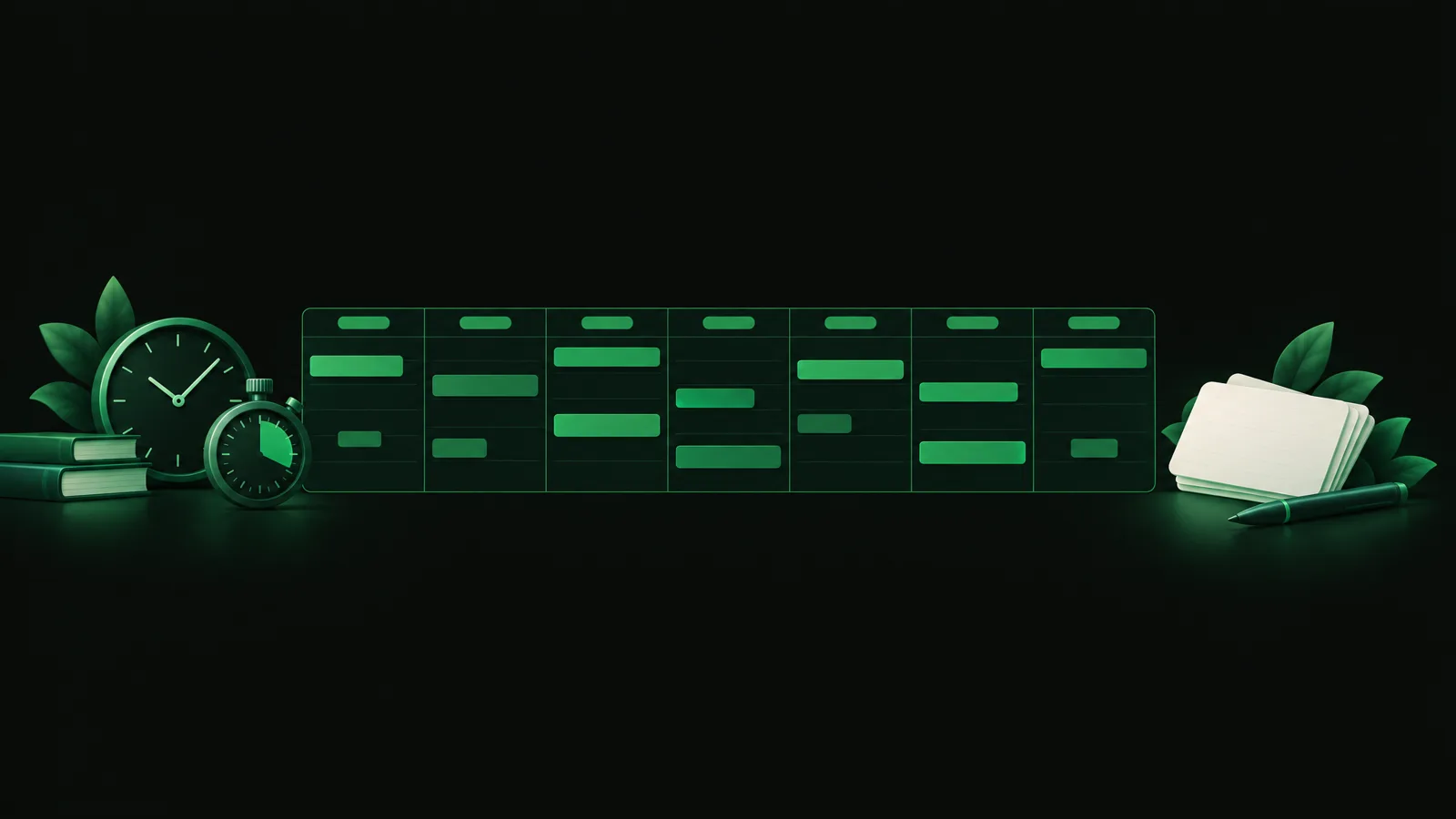
A study schedule is a weekly plan that blocks out set times to study each course around your classes, work, meals and sleep. The three templates that work for most students are a daily time-block schedule, a weekly class-by-class schedule with a review block the day after each class, and a 2357 countdown that spaces five review sessions over the 18 days before an exam. We've included seven different study schedule templates below, along with information about what kind of student each template is best for, how to fill it out, and an example. There is also a free printable PDF at the end of the post that includes all seven templates.
| # | Template | Best for | Why it works (sourced) | Time needed |
|---|---|---|---|---|
| 1 | Daily time-block schedule | Busy school days | Blocking standing commitments shows the time you really have left (Drexel) | Planned one day at a time |
| 2 | Weekly class-by-class schedule | A regular semester | Reviewing a class one day after it meets spaces your learning (Learning Scientists) | 30-60 minutes a week to plan |
| 3 | Pomodoro session | Getting started on a task | 25 minutes of focus, then a 5-minute break (Cornell) | 25 minutes per block |
| 4 | 2357 exam countdown | One exam 2-3 weeks away | Sessions 18, 11, 6, 3 and 1 days before the exam (Birmingham City University) | Starts 18 days out |
| 5 | Two-week exam countdown | Several finals at once | 30% review and 70% practice, no task over 3 hours (Penn Weingarten Center) | 14 days |
| 6 | Subject rotation day | Long study days | Concentration drops after about 90 minutes, so switch courses (Cornell) | 1-2 hours per course block |
| 7 | Long-range exam plan | Big exams months away | A bit of study every day, starting early (Learning Scientists) | Weeks to months |
Try the Quiz generator
How to make a study schedule in 5 steps
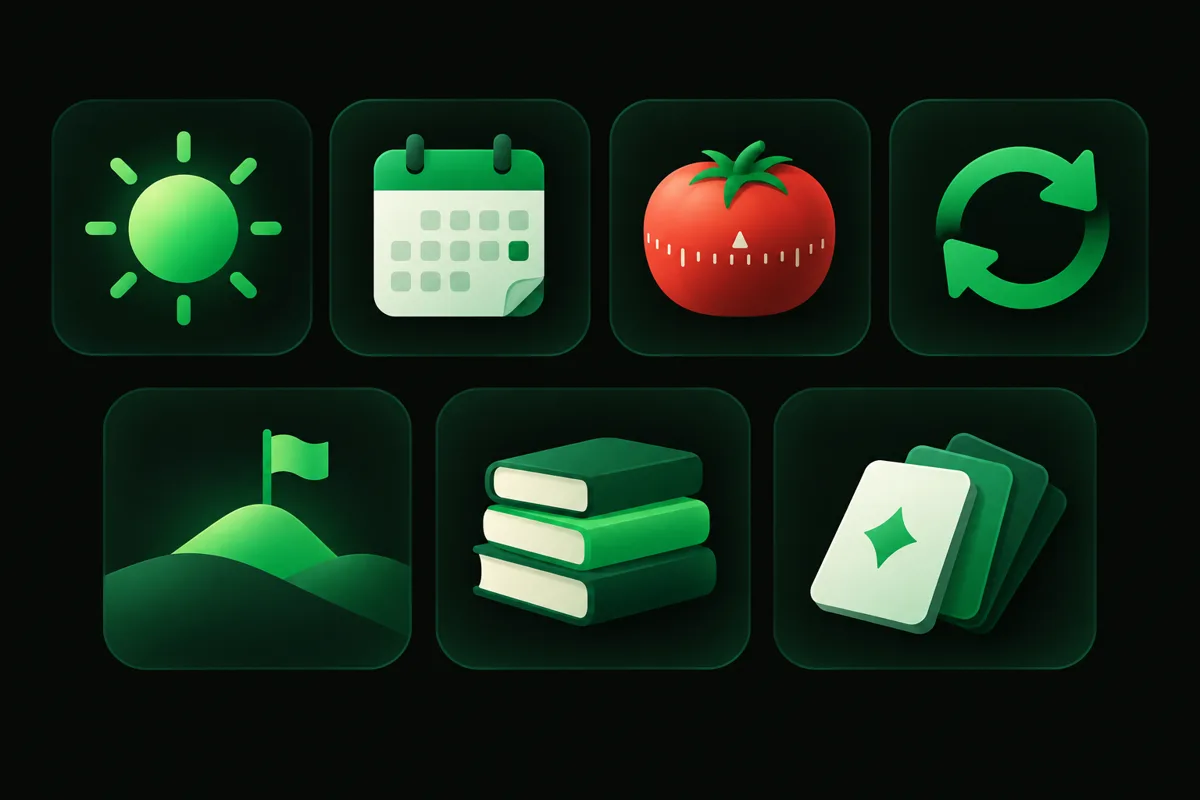
The first four steps only need to be done once per semester. Step 5 is something you'll do on a weekly basis.
- Write down every deadline. Consolidate all of your class due dates onto one calendar. Go through each syllabus and write down exam dates, when papers are due, when projects are due, etc. Add commitments outside of school: jobs, social events, family events, travel, etc.
- Block off your fixed commitments. Fill in a paper or electronic calendar with your class, work, eating, sleeping and activity times. Subtract those events from your available hours to get an idea of how much time you have left to study.
- Estimate the time each course needs, then double it. Many people don’t realize how long schoolwork will take. Cornell's Learning Strategies Center recommends estimating how long you think the assignment will take and then doubling it.
- Book study blocks like appointments. Assign days of the week to different subjects and block out study time on your calendar, just like you would for classes.
- Review the plan every week. Decide on a specific day and time block (30-60 minutes) each week to plan out your upcoming week. Adjust as needed.
Breaks, meals, sleep, friends, etc. Cornell Learning Strategies says that students learn best when their basic needs are met, so make sure your schedule includes time for those things, too. Take breaks: Include down time in your schedule, along with time to work on other classes.
How we chose these study schedule templates
We looked at study schedule advice from Cornell's Learning Strategies Center, the Weingarten Center at Penn, Drexel University Libraries, and Birmingham City University, as well as this helpful guide to spaced practice from The Learning Scientists. Our picks follow three rules. Don't cram: space out your studying over multiple days. Mix in breaks and other courses. Give each studying session a clear goal or task. All 7 are in the free printable study schedule templates (PDF).
1. Daily time-block schedule

What it is: In this type of study schedule, you divide up your day into one-hour blocks and assign an activity or task to each block. Who it's for: Students with busy schedules who have a hard time keeping track of all of their obligations. How to use it: First, fill in the blocks with your existing commitments (classes, work, appointments, etc.) Then fill in the remaining blocks with tasks that you need to get done.
- How to set it up: Put your fixed events (classes, work, meals) on the schedule first and then try to fit in some studying time during the free slots. Use the "hidden time" (those 1-2 hour chunks of free time that pop up here and there during the day, according to Cornell) wisely by assigning tasks like reviewing notes or starting assignments.
- What to schedule first: Try to make short reviews of each lecture right after each lecture (same day). Cornell says an hour of reviewing soon after class does as much as several hours a few days later.
- Example: class (9-11), review notes (11-12), lunch, lab (1-3), begin problem set (3-4), free time in the evening
Pro tip: Cornell points out that if you approach your day in school like you would a workday and get your work done during the school day, you'll have more free time in the evening.
2. Weekly class-by-class schedule
What it is: This type of study schedule breaks your week into blocks for studying each of your classes. Who it's for: Most students during a regular (not exam-heavy) part of the semester.
- How to set it up: take note of what classes you have that day and add a brief review block for each of those classes the following day. According to The Learning Scientists, if you have class on Monday, Wednesday, and Friday, you should plan on studying the material on Tuesday, Thursday, and Saturday.
- Add a weekly review: Cornell advocates setting aside time on a regular basis (at least once a week) to go over all the material covered so far that semester in each of your classes.
- Example: English on Tuesdays and Fridays, Math on Mondays and Thursdays according to Drexel’s guide.
Use these sessions to actively recall or quiz yourself on the material instead of just re-reading your notes. The Learning Scientists say short sessions should use strategies like retrieval practice, which our active recall guide walks through step by step.
3. Pomodoro study schedule
What it is: The Pomodoro Technique breaks studying into small, manageable chunks. Who it's for: Students who have a hard time starting assignments or staying focused. How to use it: According to Cornell, pick an assignment, set a timer for 25 minutes, and work on that assignment (distraction-free!) for 25 minutes.
- Why it helps: College Essay Guy points out that 25 minutes is not an intimidating amount of time, and getting started is usually the hardest part.
- How to set it up: list the tasks for the session, start a timer and silence your phone. Then take a five-minute break (do something unrelated to your studying, like grabbing a snack or stretching out), and repeat.
- Example: four blocks on one chapter: read and summarize, make flashcards, quiz yourself, then redo the questions you missed.
This technique can be added onto any of the other study schedule templates, you could Pomodoro your way through the tasks on a daily or weekly schedule, for instance.
4. 2357 spaced repetition schedule
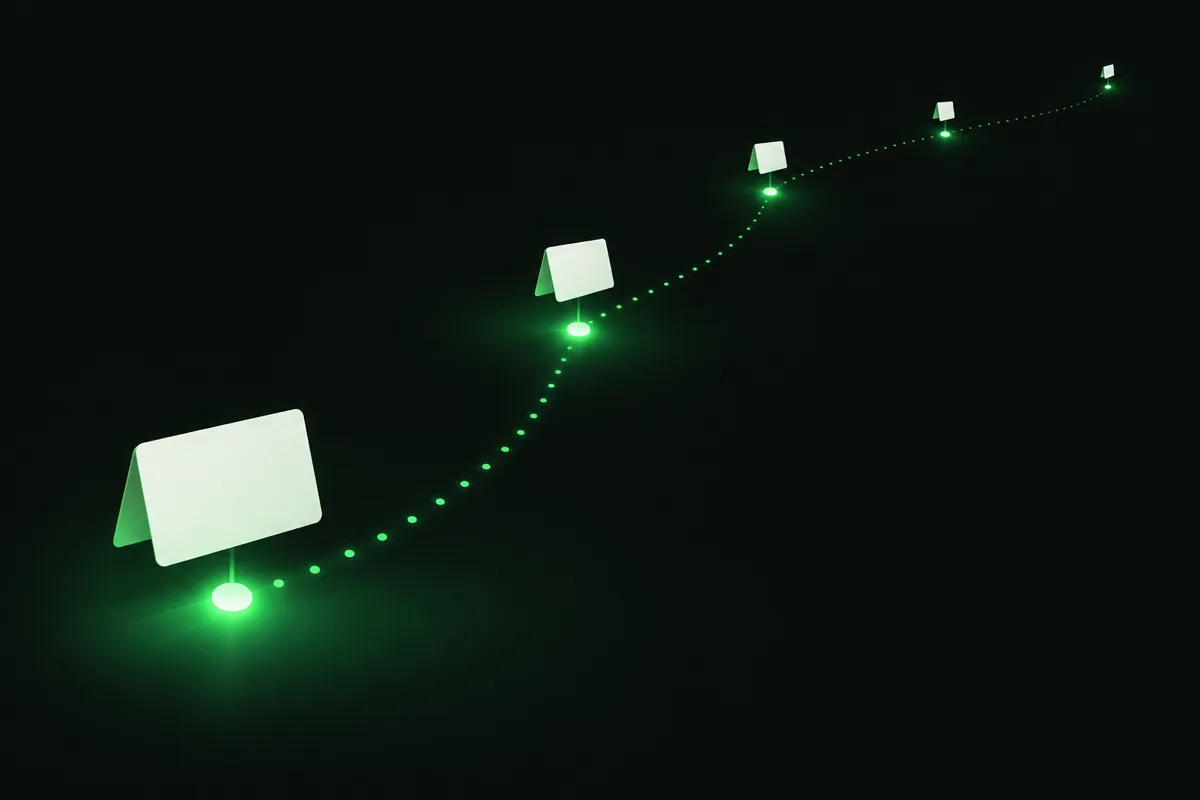
What it is: 2357 is a version of spaced repetition, in which you revisit material over time. How to use it: Birmingham City University counts back from your exam. Plan a session the day before the exam, count back two days and plan another, then count back three days, five days and seven days. That puts your sessions 18, 11, 6, 3 and 1 days before the exam.
| Session | Days before the exam | Gap to the next session |
|---|---|---|
| 1 (first session) | 18 | 7 days |
| 2 | 11 | 5 days |
| 3 | 6 | 3 days |
| 4 | 3 | 2 days |
| 5 (last session) | 1 | 1 day to the exam |
- Who it's for: one exam with a fixed date two to three weeks away.
- How to set it up: Count down each subject and try to avoid having too many that end on the same day. Stagger them. BCU calls 2357 a "framework," so feel free to shorten the gaps for more challenging subjects and lengthen them for easier ones.
- Example: if your biology exam is on the 28th, your sessions fall on the 10th, 17th, 22nd, 25th and 27th.
Just remember that this method tells you when to study, not how. Make every session a self-test, for example with flashcards you turn from a PDF into flashcards. For longer gaps and the research behind them, read our guide to spaced repetition.
5. Two-week exam countdown
What it is: Finals week schedules divide up your time between the different subjects you'll be tested on. Who it's for: Students during finals week (or any other week with multiple exams). How to use it: Penn's Weingarten Center suggests the following process for creating a study schedule for finals week (or any stretch of time with multiple exams):
- Rank your classes by which exam is soonest, which matters most for your major and which is hardest.
- Split the work: Weingarten recommends 30% review and 70% practice (work problems from old exams, problem sets, etc.).
- Size the tasks: it cautions against assigning more than 3 hours to one task.
- Schedule it: write your tasks down on a calendar and try not to spend too much time on one subject at a time (alternate between different subjects). Make sure you include meal and relaxation times too!
Practice is where most of your time should go, so make it easy to get practice questions. Start each practice block with practice questions (with answers and explanations) that StudySim's AI quiz generator makes from your notes or a PDF. Our 2-week plan for studying for finals fills this template in day by day.
6. Subject rotation schedule
What it is: A rotation schedule divides up your studying day(s) into blocks of time for different subjects. Who it's for: Students on weekends or during otherwise-long study sessions.
- Why rotate: Cornell advises against working on one course for more than an hour or two at a time, because the ability to concentrate drops quickly after about 90 minutes.
- The bonus: switching courses means you learn your exam material better and don't fall behind in your other classes, Cornell says.
- Example: 9-10:30am chemistry, break, 10:45-12pm history, lunch, 1-2:30pm statistics, break, 2:45-3:30pm practice problems for chemistry
How to use it: Schedule breaks in between studying blocks to get up, stretch, and grab a snack. According to Drexel's guide, if you're studying for multiple days in a row, also make sure to schedule in time to exercise, see friends, and pursue hobbies to avoid getting discouraged.
7. Long-range exam plan
What it is: Long-term study schedules lay out your studying over weeks or months at a time. Who it's for: Students studying for big exams (cumulative finals, the MCAT, the bar exam, etc.). How to use it: The Learning Scientists suggest incorporating the science of spaced learning into your long-term study schedule: Start planning early. Set aside time to study every day (even if your exam is months away). Once you're done reviewing new material, review key points from previously-studied material.
- How to set it up: Include practice tests periodically throughout the plan and group material according to the week it will be covered. Leave space to jot down topics to review later.
- Who it's for: If you’re studying for standardized tests or cumulative exams.
- Example: our MCAT study plan has 3- and 6-month versions, and you can check your progress with an MCAT practice test.
The Learning Scientists also note that spacing out your studying over time takes less time and results in more long-lasting learning than crammed studying sessions, which are often accomplished by sacrificing sleep.
Which study schedule template should you use?

Pick one of the above study schedule templates and try it out for a week before making any changes. (You can also combine them later on.)
| If you want to… | Start with template # | Then add |
|---|---|---|
| Stop losing time between classes | 1. Daily time-block | 3. Pomodoro blocks |
| Keep up all semester | 2. Weekly class-by-class | 4. 2357 countdown before each exam |
| Beat procrastination | 3. Pomodoro | 1. Daily time-block |
| Prepare for one exam in 2-3 weeks | 4. 2357 countdown | 6. Subject rotation |
| Survive finals week | 5. Two-week countdown | 6. Subject rotation |
| Prepare for a big test months out | 7. Long-range plan | 2. Weekly class-by-class |
According to Drexel's guide, consistency is key when it comes to using a study schedule. If your current schedule isn't working, don't give up, just try a new template! For the study methods to use inside each block, see our guide on how to study effectively.
Download the 7 study schedule templates (PDF), print the one you need and fill it in this week. Then turn your notes into practice questions for each review block with StudySim's quiz maker.
FAQ
What is the best schedule for study?
The best study schedule spaces study over days instead of cramming, blocks time around your classes, meals and sleep, and switches courses every hour or two. For most students, a weekly class-by-class schedule with a review block the day after each class is a strong default.
What is the 2 3 5 7 study rule?
It is a spaced repetition schedule. In the exam countdown version, you plan a session the day before the exam, then count back 2, 3, 5 and 7 days and plan a session at each point, so sessions fall 18, 11, 6, 3 and 1 days before the exam.
What is a study schedule?
A study schedule is a time-management plan that sets aside dedicated time to study each course. It breaks tasks and assignments into manageable chunks around your other commitments, so you are better prepared for exams.
How do I make a study schedule I will stick to?
Block your fixed commitments first, double your time estimates, and add study sessions to your calendar like any other appointment. Keep breaks and time for friends in the plan, and adjust it every week instead of abandoning it.
How long should each study session be?
Cornell suggests not working on one course for more than an hour or two at a time, since concentration drops after about 90 minutes. If you struggle to start, use 25-minute Pomodoro blocks with 5-minute breaks.
About the author
Jozef Gherman is the founder of XYZAI, the company behind StudySim, where he builds AI tools that help students and writers study smarter and write with confidence. He writes about study techniques, exam prep, and practical ways to use AI for learning.